
In the realm of dentistry, providing exceptional care to patients is not only a commitment but also a business strategy. While many dental practices focus on the conventional services they offer, there’s an underutilized gem that holds immense potential for revenue generation – myofunctional therapy.
Implementing oral myofunctional therapy (OMT) in your dental practice can be a game-changer, not just for your patients but also for your bottom line. It’s an integrative service that can generate a minimum of $230,000 a year often without any additional work from the dentist, as it. My name is Karese Laguerre. I am a registered dental hygienist, a key opinion leader, and a myofunctional therapist. I am here to answer all your burning questions about integrating myofunctional therapy into your dental practice.
Benefits of Myofunctional Therapy in Dental Practice
There are numerous benefits of myofunctional therapy that extend far beyond profitability. While the bottom line is crucial—after all, dental practices are businesses that need to support staff and maintain viability—the ripple effect of myofunctional therapy is profound.
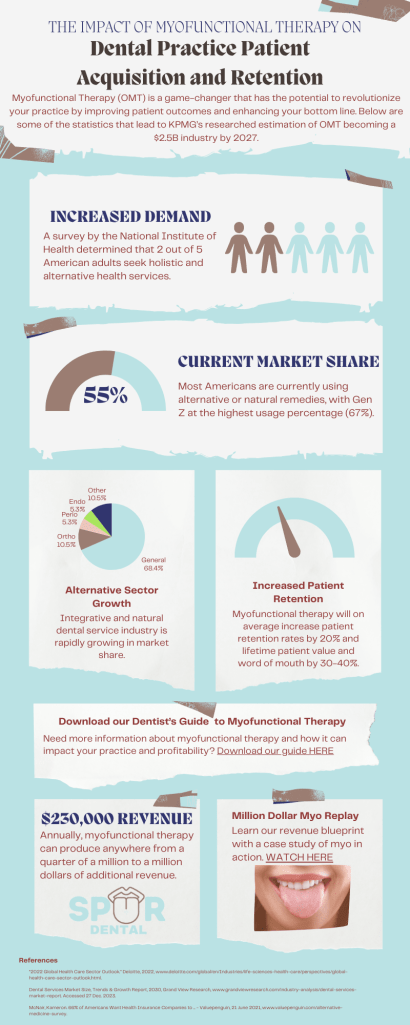
Patient Benefits: Patients, especially those in orthodontics, can significantly benefit from myofunctional therapy. Issues such as tongue thrust, parafunctional habits, TMD, and orofacial pain can counteract the effectiveness of orthodontic treatments. Myofunctional therapy helps facilitate better use of oral musculature, leading to more successful outcomes in traditional restorative methods, decreased periodontal disease, and reduced restorative treatment breakage.
Staff Retention: Dental hygienists often feel they have hit a ceiling in their careers. Myofunctional therapy offers them a new, fulfilling role, revitalizing their careers and increasing staff retention and loyalty. By offering a unique service that only 1% of dental practices implement, you can differentiate your practice and keep your team engaged.
Competitive Advantage: The demand for integrative services like myofunctional therapy is high. According to the National Institute of Health, one in three Americans seeks more integrative services in their medical and dental practices. By offering myofunctional therapy, you can meet this demand and stand out in a competitive market.
Costs and Challenges of Implementing Myofunctional Therapy
While the initial investment in myofunctional therapy can range from $2,500 to $4,000 for courses, the real challenge lies in the lack of systems for implementation. Many courses provide didactic information without clinical implementation, leaving dental providers at a disadvantage. Without a consistent system, you’re likely to lose your investment. Therefore, it’s crucial to choose a comprehensive course that includes on-site instruction and clinical experience.

Legal and Regulatory Considerations
Currently, there are no specific regulations governing myofunctional therapy. It is not part of any dental state practice acts in the USA, meaning it must be performed separately from traditional dental services. Understanding this separation is essential to implementing myofunctional therapy correctly and legally in your practice.
Learn More and Get Started
For more insights into the transformative potential of myofunctional therapy within dental practices, check out my article published in Dental Economics, “Myofunctional Therapy: A Game Changer for DSOs.” This piece delves into how integrating myofunctional therapy can set DSOs apart in a competitive market, enhancing patient care and business growth. Read the full article here.
To explore whether myofunctional therapy is right for your practice, I invite you to schedule a 30-minute planning call with me. During our conversation, I can provide insights tailored to your area and needs, conduct a complimentary market survey, and help you determine the true profitability of myofunctional therapy for your practice.

 Airway Matters